
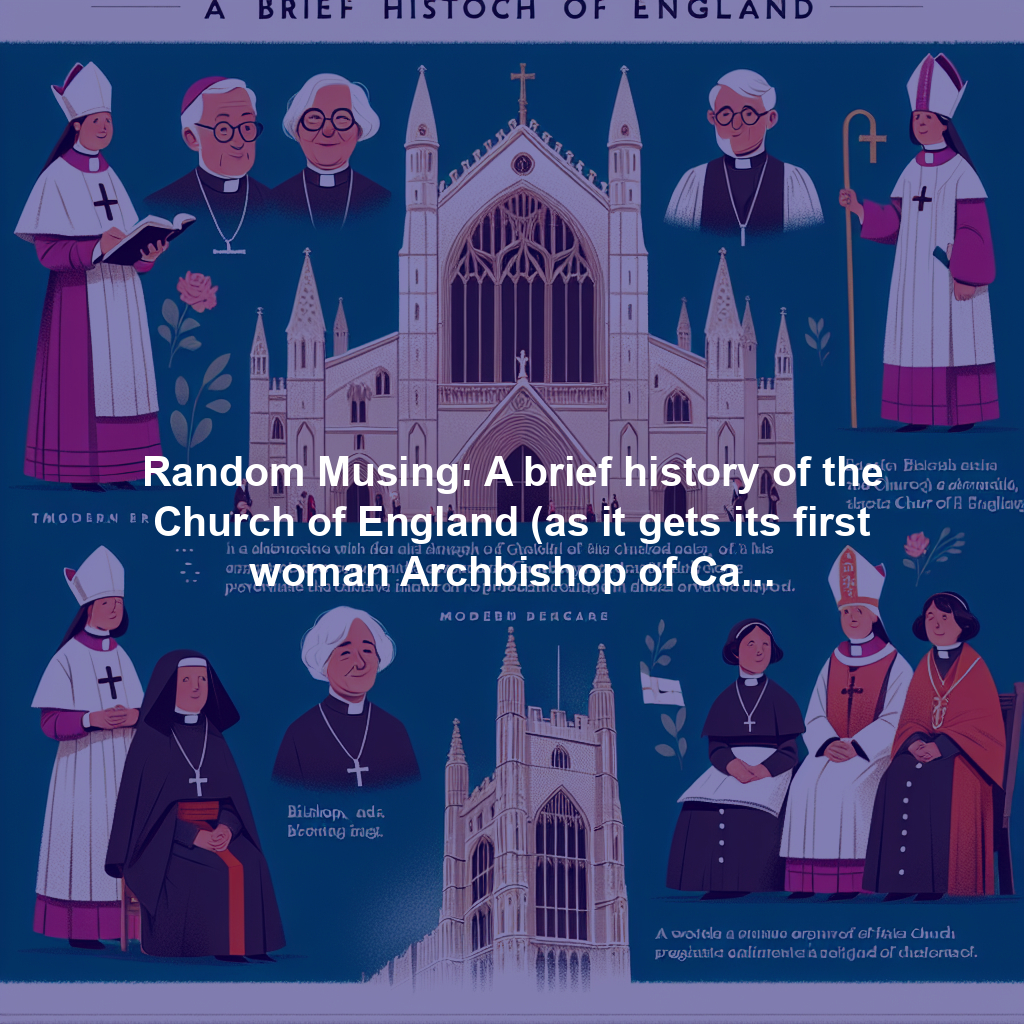
The Church of England recently appointed its first female Archbishop of Canterbury, Dame Sarah Mullally, marking a significant milestone in its nearly 500-year history. This appointment follows the resignation of her predecessor due to an abuse scandal involving hundreds of boys.
The establishment of a separate Church in England dates back to the English Reformation, initiated by Henry VIII, who sought to annul his marriage to Catherine of Aragon. The Pope’s refusal led to the Act of Supremacy in 1534, effectively nationalizing Roman Catholicism and establishing the Church of England (CoE).
Key developments in the Church’s history include the creation of the Book of Common Prayer by Archbishop Thomas Cranmer in 1549 and the publication of the King James Bible. These works allowed for English worship and retained much of the Catholic structure while adopting Protestant theology.
Throughout its history, the CoE has navigated various theological movements, including the Puritan revival and the Oxford Movement, which sought to reclaim older Catholic-style rituals. The Church maintained a close relationship with the British state, evident in bishops sitting in Parliament and monarchs ruling as heads of the Church.
In recent decades, the Church has adapted to societal changes, ordaining women as priests in 1994 and bishops in 2015. However, issues regarding LGBT+ rights and ongoing safeguarding scandals have raised concerns about credibility and authority within the institution.
Dame Sarah Mullally’s background as a nurse and administrator positions her to address the Church’s current challenges, including declining attendance and internal divisions. The formal appointment process involves King Charles III and Prime Minister Keir Starmer, highlighting the complex relationship between the monarchy and the Church.
While many in Britain celebrate her appointment as a progressive step forward, conservative leaders both domestically and globally have expressed condemnation. The Vatican issued a neutral response, reflecting ongoing tensions surrounding the role of women in leadership within religious institutions.
Source: Reported based on publicly available information from timesofindia.indiatimes.com.